

There are no projects in the garbage can.
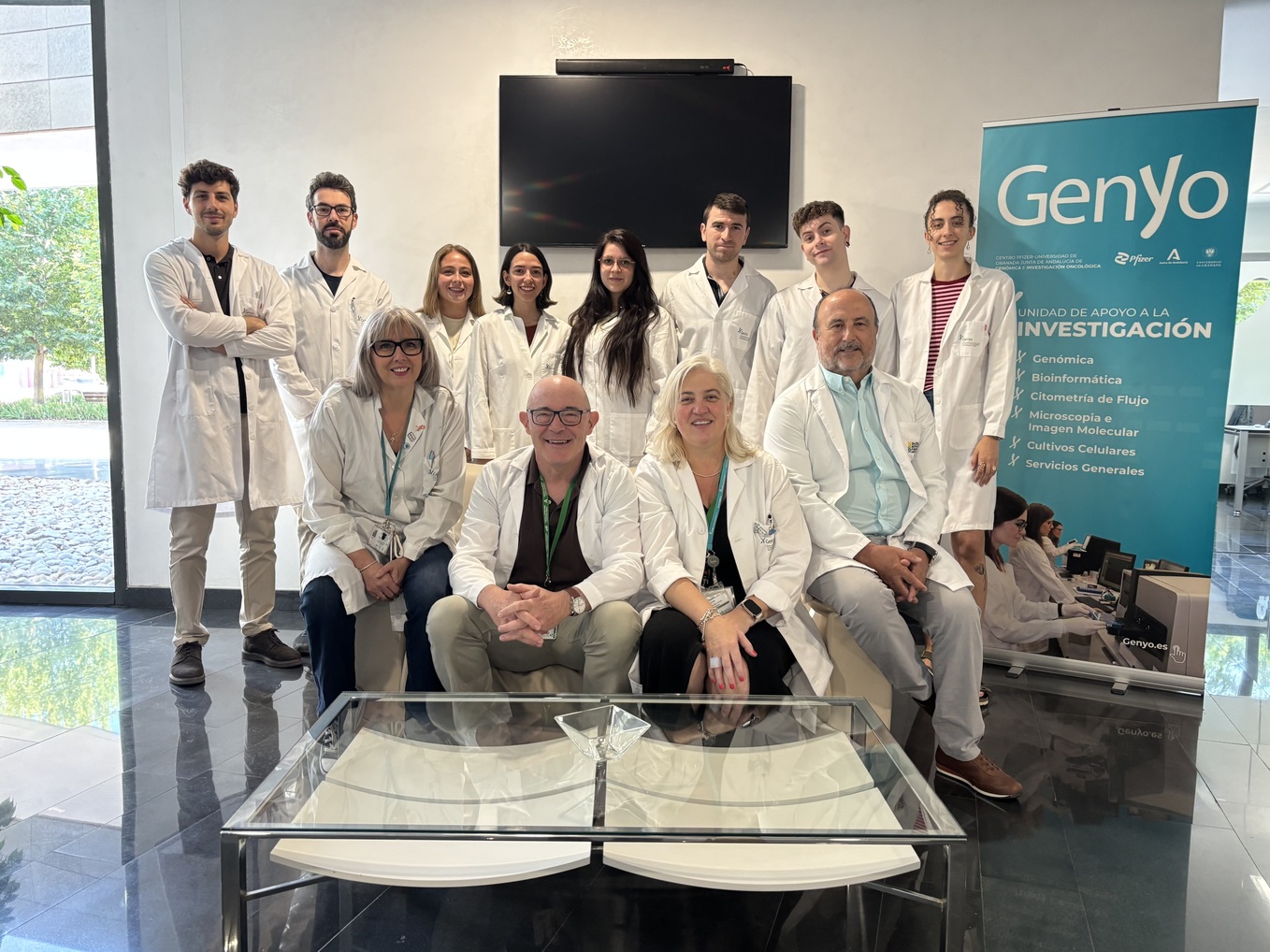
A team of researchers from GENyO and the University of Granada, in collaboration with clinicians from the Virgen de las Nieves University Hospital, has published a study in *Human Genomics* that validates a gene signature with the potential to improve the detection of prostate cancer, particularly in cases involving inconclusive or false-negative biopsies.
Prostate cancer remains one of the most common cancers in men, and its diagnosis presents significant challenges, particularly when a biopsy does not yield conclusive results. Against this backdrop, a team of researchers from the GENyO centre (the Pfizer-University of Granada-Regional Government of Andalusia Centre for Genomics and Cancer Research) and the University of Granada, who are experts in genetics, computer science and artificial intelligence, in collaboration with clinicians from the Virgen de las Nieves University Hospital, has evaluated a gene signature with potential clinical application in this field, culminating a line of research initiated in 2019 based on the analysis of public data using Artificial Intelligence.
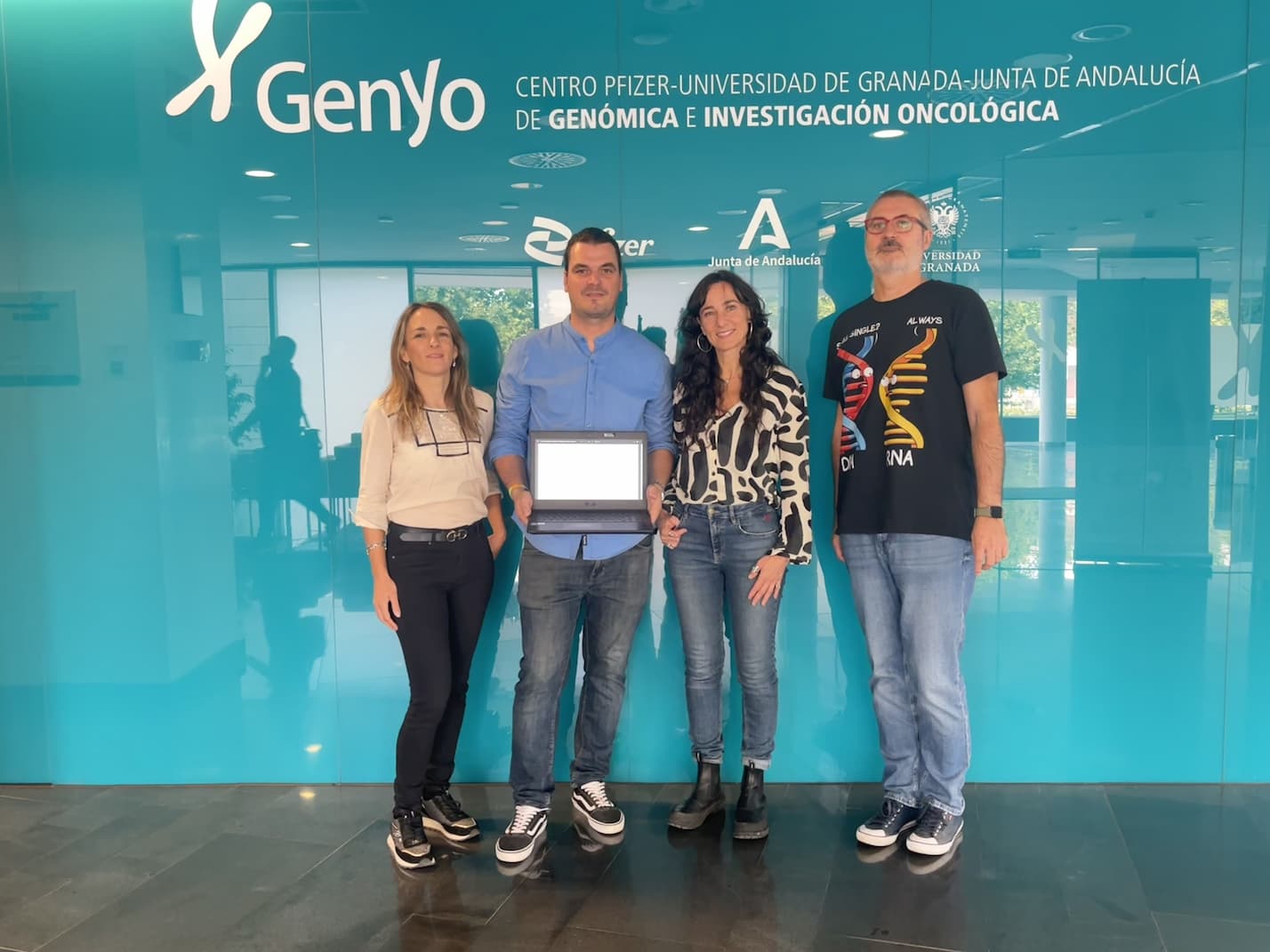
The study, led by researchers María Jesús Álvarez Cubero and Luis Javier Martínez González, has Patricia Porras as its lead author, a pre-doctoral researcher at the University of Granada, with the participation of Alberto Ramírez, who is responsible for developing the predictive model based on Artificial Intelligence on which this work is founded; this model was developed in earlier phases and has now been tested thanks to ongoing collaboration with Jesús Alcalá Fernández from the Department of Computer Science and Artificial Intelligence. In this research, selected genes have been experimentally validated in independent clinical samples, comprising both prostate tissue and plasma.
Although prostate biopsy remains a key test in the diagnosis of prostate cancer, it can yield inconclusive or false-negative results, which in certain cases necessitates further biopsies and subjects patients to additional invasive procedures—a premise on which this research is based.
To address this limitation, the research team has experimentally validated genes selected using a predictive model developed with artificial intelligence. This validation was carried out on independent clinical samples, comprising both prostate tissue and plasma, which supports the results obtained.
As a result, a signature comprising six genes (DLX1, TDRD1, AMACR, HPN, HOXC6 and OR51E2) has been identified, capable of distinguishing between tumour and non-tumour tissue with high accuracy. Furthermore, the AMACR gene has demonstrated value as a non-invasive biomarker in plasma, particularly when combined with prostate-specific antigen (PSA), achieving high diagnostic accuracy.
The results show that this gene signature enables the identification of false-negative cases in biopsies and improves patient classification. This could contribute both to improving the diagnosis at the first biopsy and to reducing the number of rebiopsies in patients with negative results, thereby reducing unnecessary invasive procedures and improving the clinical management of prostate cancer.
Article reference:
Porras-Quesada, P. et al. Enhancing prostate cancer diagnosis: a machine learning-based biomarker approach. Human Genomics (2026). DOI: 10.1186/s40246-026-00939-6.
https://link.springer.com/article/10.1186/s40246-026-00939-6
Contacts:
patricia.porras@genyo.es
mjesusac@ugr.es
luisjavier.martinez@genyo.es
See more news