








optimize and scale up the production of iTRUCK1918 cells

There are no projects in the garbage can.
Gene and Cell Therapy
The general objective of the Gene and Cell Therapy group (GCTG) is the Improvement and Generation of Advanced Therapy Medicines for Cancer and Rare Diseases through the Combination of Gene Addition and Genomic Editing.
In recent years, gene therapy (GT) has achieved unprecedented success in clinical trials for various previously incurable conditions. This has led to the approval of a total of 16 advanced therapy medicines (ATMPs) involving genetic modification.
General Information
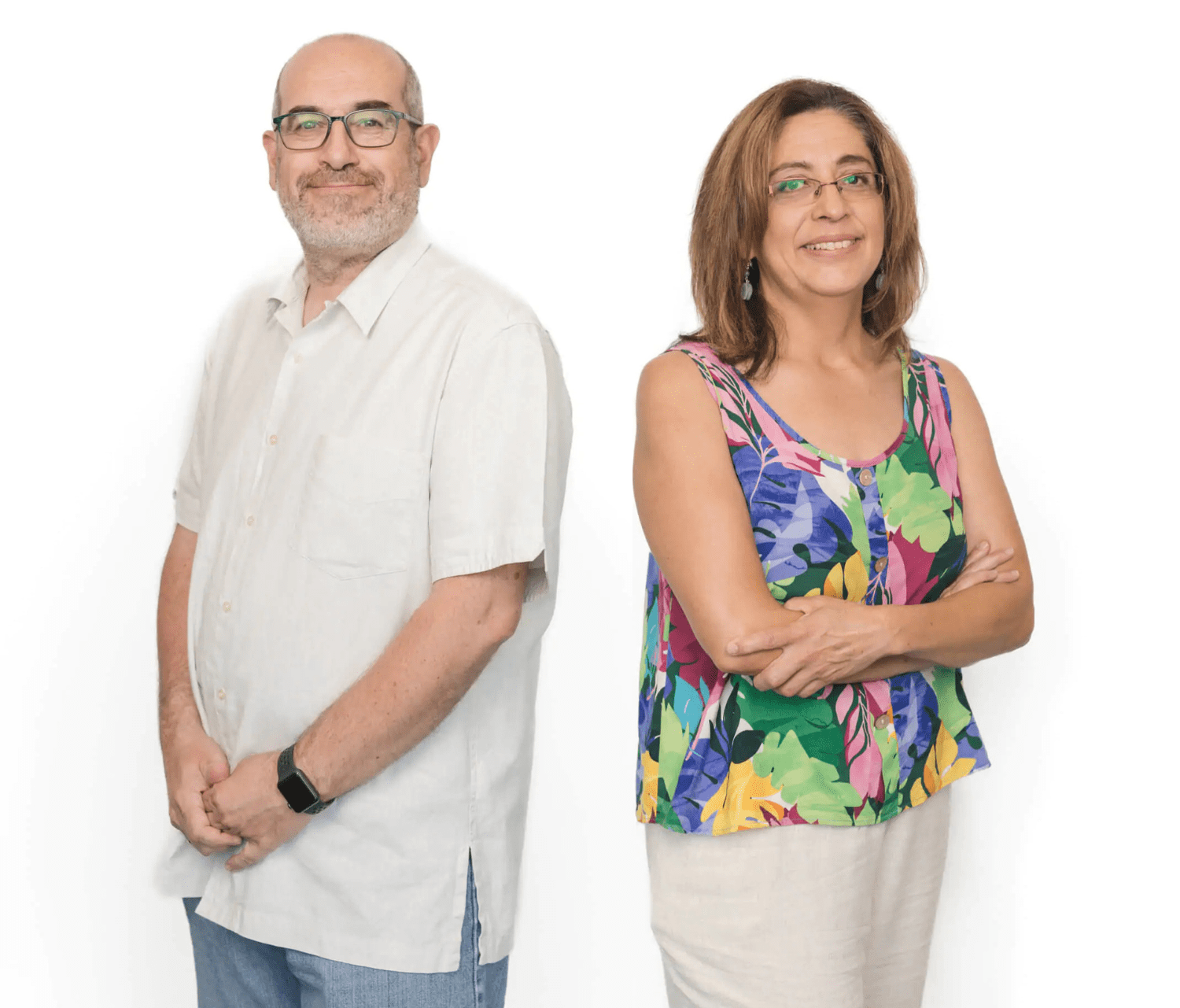
Gene therapy is rewriting the future of medicine through Advanced Therapy Medicinal Products (ATMPs) capable of curing previously untreatable conditions. In line with this, the Gene and Cell Therapy Group (TGyC), led by Dr. Francisco Martín Molina, is on a mission to generate and refine new treatments for cancer and rare diseases by combining gene addition and genomic editing. The group’s key differentiator is its ability to translate innovation from bench to bedside—a translational impact highlighted by three major milestones: – The creation of the spin-off LentiStem Biotech to commercially drive its patents. – Its key role in the public CPI-CAR-T Andalucía program to develop a best-in-class treatment. – The first major clinical leap for its technologies through the AWARI clinical trial, led by Dr. Inmaculada Herrera at Reina Sofía Hospital (2026). To sustain this scientific engine, the Unit operates seamlessly, driven by two teams working in total synergy.
- Gene Immuno-Therapy team (IGTG), led by Dr. María Tristán-Manzano, is revolutionizing oncology by developing “smart” CAR-T cells (TRUCKs) equipped with the patented ALHAMBRA technology to act directly within the tumor, as well as novel nanobody-based CARs capable of distinguishing healthy from tumor tissue based on target antigen expression levels.
- Precision Genomic Editing team (EDIT-LAB), headed by Dr. Francisco Javier Molina Estévez, pioneers the application of ultra-precise and safe CRISPR tools alongside advanced preclinical models. Together, IGTG and EDIT-LAB ensure an uninterrupted technological pipeline that dramatically accelerates the arrival of tomorrow’s therapies to the patients who need them today.
The general objective of the Gene and Cell Therapy unit (GCTG) is the Improvement and Generation of Advanced Therapy Medicines for Cancer and Rare Diseases through the Combination of Gene Addition and Genomic Editing. In recent years, gene therapy (GT) has achieved unprecedented success in clinical trials for various previously incurable conditions. This has led to the approval of a total of 16 advanced therapy medicines (ATMPs) involving genetic modification. It is important to note that most of these GT-based medicines are based on introducing genetic material into target cells using viral vectors. In this direction, the overall goal of this group is to generate advanced therapy medicines based on genetic modification for the treatment of cancer and monogenic diseases. To achieve this goal, two main sub-lines will be pursued, aiming for the following scientific and technical impacts:
Improvement of Genetic Modification Tools
Improvement of Genetic Modification Tools with a Focus on Cancer and rare diseases. Despite the potential of viral vectors, there are still various efficacy and safety issues that hinder their use for many other pathologies. Therefore, an important objective is to refine the available viral vectors and, more importantly, implement new gene therapy (GT)
techniques based on genomic editing (GE) using non-viral systems. While viral vectors have shown good results, limitations persist related to their origin and their ability to alter the expression of oncogenes in specific cell types. Unlike traditional systems, GE allows for the creation or repair of mutations and the insertion of fragments up to 10 kb at a specific site efficiently enough to translate it to clinical applications. Consequently, GE can not only replace lentiviral vectors by inserting the transgene in a safer or better-expressing site but also enable novel therapeutic approaches impossible with traditional genetic modification systems.
The development of new therapeutic strategies
The development of new therapeutic strategies for currently untreated pathologies is crucial. Advances in the previous section will be utilized to create more effective and safer Advanced Therapy Medicinal Products (ATMPs) for treating conditions such as Pompe disease, lymphomas, and pancreatic cancer (which can be extended to other solid tumors).
These ATMPs will primarily involve ex vivo modification of T cells (lymphocyte engineering) and multipotent hematopoietic stem cells (HSCs).
- Lymphocyte engineering for cancer treatment: CAR-T cells
The GCTG has patented several tools for the development of improved CAR-T cells for the treatment of cancer. These technologies were the basis for the creation of LentiStem Biotech, the first Spanish Spin-off working on CAR-T cells. In addition, it is expected to reach first-in-human clinical trial approval by the end of 2024. This proposed clinical trial
has been financed by the ISCIII for the treatment of refractory type B Leukemias and Lymphomas and is led by Dra Inmaculada Herrera from H.U Reina Sofia (Córdoba). In addition, we are developing inducible 4th generation CAR-T cells for the treatment of Pancreatic cancer in collaboration with Dr Jose Antonio Salcedo (GENYO), Dr Juan Antonio Marchal (UGR), Dr Pedro Sierra and Dr Maria Rueda (H.U. Virgen de las Nieves), Dr Felipe Prosper (Clinica Universitaria de Navarra) y Dr Juan Bueren (CIEMAT). This project is financed by two National grants and the
TerAv network and use genome editing tools, inducible vectors (patented by the GCTG) and nanobodies to design more efficient and safer CAR-T cells for the treatment of solid tumors.
- Gene therapy for Pompe disease
The other objective of the GCTG is to use the new vectors and genome editing tools to generate an ATMP to treat Pompe disease. To tackle this objective, our first aim is to generate relevant cells and animal models were to study the efficacy and safety of the new ATMPs. This research line is led by Dr Pilar Muñoz and Fco Javier Molina Estevez and count with the support of National, Regional and Private grants, as well as with the help of patients association.
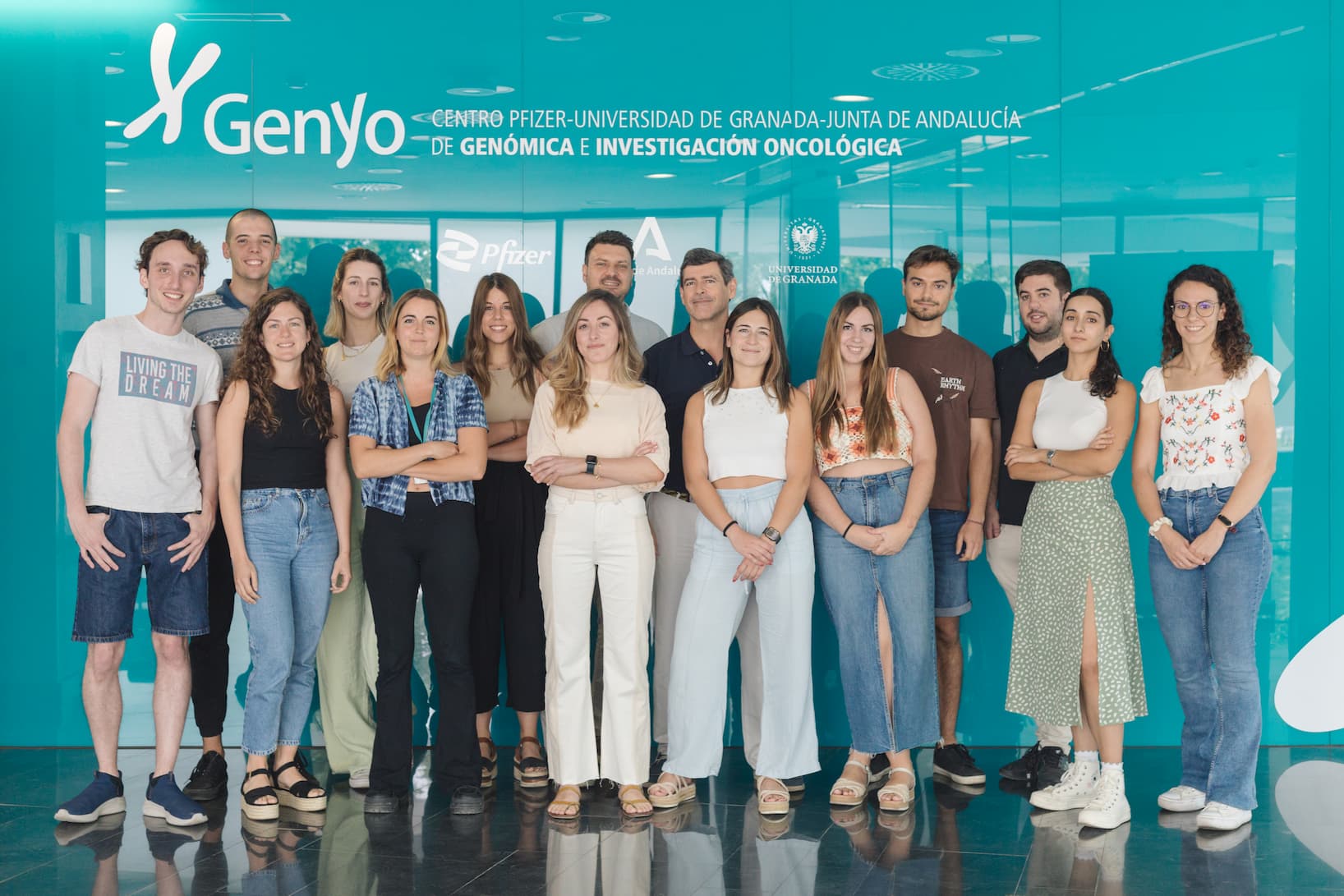
Members
Researchers - R3
Postdoctoral Researchers - R2
Predoctoral Researchers - R1
Research Technicians
Research teams
Immuno Gene Therapy Group (IGTG)
Precision Genome Editing and Preclinical Models Group
Projects
optimize and scale up the production of universal anti-CD19 CAR-T cells (UCARARI)
Generación de células NanoCAR-T de 4ta generación bi-especficas e inducibles para el tratamiento de tumores sólidos: Aplicación a tumor de páncreas.
Ingeniería de linfocitos para la generación de células CAR-T universales e inducibles para Inmunoterapia de linfomas refractarios
RED DE TERAPIAS AVANZADAS (TerAv+)
Generación de células CAR-T inducibles de 4ta generación para el tratamiento de tumores solidos positivos para HER2+
Ingeniería de células CAR- T para el tratamiento de tumores sólidos: CARSOTU Ref:
Generation of a New Humanized Pompe Disease Model for Improved Robust Pre-Clinical Evaluation of new Pompe Therapeutics
Mejora de las Estrategias Para Terapia Génica en Enfermedades Poco Frecuentes. Aplicabilidad Para Ensayo Clínico en la Enfermedad de Pompe
Herramientas mejoradas para terapia celular-génica de la enfermedad de Pompe
Superando limitaciones para fortalecer y potenciar estrategias de terapia génica para el tratamiento de la enfermedad de Pompe.
STEM-iTRUCK: células CAR-T de última generación para el tratamiento seguro y eficaz de tumores sólidos
optimize and scale up the production of iTRUCK1918 cells
File number: ScaleReady
Principal Investigator: Dr. Francisco Martin Molina
Funder: ScaleReady
Execution period: 01/01/2025 – 31/12/2027
optimize and scale up the production of universal anti-CD19 CAR-T cells (UCARARI)
File number: ScaleReady
Principal Investigator: Dr. Francisco Martin Molina
Funder: ScaleReady
Execution period: 01/01/2025 – 31/12/2027
Generación de células NanoCAR-T de 4ta generación bi-especficas e inducibles para el tratamiento de tumores sólidos: Aplicación a tumor de páncreas.
File number: PI24/00888
Principal Investigator: Dr. Francisco Martin Molina
Funder: ISCIII
Execution period: 01/01/2025 – 31/12/2027
Ingeniería de linfocitos para la generación de células CAR-T universales e inducibles para Inmunoterapia de linfomas refractarios
File number: PI-0236-2024
Principal Investigator: Dr. Francisco Martin Molina
Funder: Consejeria de Salud
Execution period: 01/01/2025 – 31/12/2027
RED DE TERAPIAS AVANZADAS (TerAv+)
File number: RD24_0014_0005
Principal Investigator: Dr. Francisco Martin Molina
Funder: ISCIII
Execution period: 01/01/2025 – 31/12/2027
Generación de células CAR-T inducibles de 4ta generación para el tratamiento de tumores solidos positivos para HER2+
File number: PMPTA22/00060
Principal Investigator: Dr. Francisco Martin Molina
Funder: ISCIII
Execution period: 01/01/2023 – 30/06/2025
Ingeniería de células CAR- T para el tratamiento de tumores sólidos: CARSOTU Ref:
File number: DGP_PIDI_2024_00274
Principal Investigator: Dr. Francisco Martin Molina
Funder: CUII
Execution period: 01/01/2026 – 31/12/2028
Generation of a New Humanized Pompe Disease Model for Improved Robust Pre-Clinical Evaluation of new Pompe Therapeutics
File number: Spark Therapeutic
Principal Investigator: Dr. Javier Molina Estevez
Funder: Spark Therapeutic
Execution period: 01/01/2023 – 31/12/2025
Mejora de las Estrategias Para Terapia Génica en Enfermedades Poco Frecuentes. Aplicabilidad Para Ensayo Clínico en la Enfermedad de Pompe
File number: EMERGIA20_00049
Principal Investigator: Dr. Pilar Muñoz Fernandez
Funder: CUII
Execution period: 15/02/2022 – 14/02/2026
Herramientas mejoradas para terapia celular-génica de la enfermedad de Pompe
File number: PI21/00875
Principal Investigator: Dr. Pilar Muñoz Fernandez
Funder: ISCIII
Execution period: 01/01/2022 – 31/12/2024 (PRORROGADO HASTA 30/09/25)
Superando limitaciones para fortalecer y potenciar estrategias de terapia génica para el tratamiento de la enfermedad de Pompe.
File number: PI24/00216
Principal Investigator: Dr. Pilar Muñoz Fernandez (Co-IP: Fco Javier Molina Estévez)
Funder: ISCIII
Execution period: 01/01/2025 – 31/12/2027
STEM-iTRUCK: células CAR-T de última generación para el tratamiento seguro y eficaz de tumores sólidos
File number: ProyExcel_00373
Principal Investigator: Dr. Veronica Ayllón
Funder: CUII
Execution period: 01/01/2023 – 31/12/2025
Publications
Other Research Group